 9
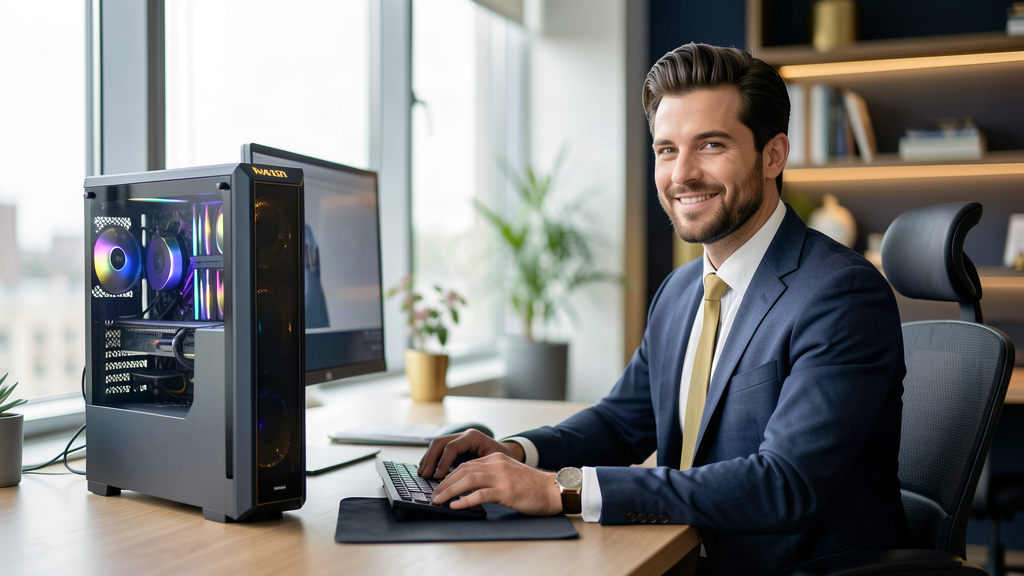
For years, the default objection to private AI ran like clockwork: “we’d love to keep our client data in-house, but the hardware to do it well is too expensive.” That sentence used to carry real weight. It no longer does.
Something quietly shifted that most firms have not yet absorbed. The price of capable local compute has collapsed to the point where the machine already sitting on your desk — the one procured for nothing more ambitious than everyday work — can run a serious, self-hosted model all by itself, with no data leaving your control. The hardware barrier to sovereign AI did not merely lower. For a very large share of professional firms, it simply went away.
This is not a claim about exotic, capital-intensive infrastructure. It is the opposite. Commodity graphics hardware you may already own is now sufficient to hold a model with a meaningful long-context window entirely on-premises. A modest, off-the-shelf workstation — the kind that runs diagnostics, document review, or a practice management suite today — has enough onboard memory to run a capable open-weights model locally. That is the entire story, and it is a big one.
Why should a law firm, CPA practice, or government contractor care? Because the economics stopped being the excuse:
1. Capability now scales on hardware you already hold. The threshold for running a genuinely useful local model is far lower than most billing partners assume. The machine that currently handles your document management can likely serve a private assistant for the whole firm in parallel. You are not starting from zero — you are repurposing capacity that already sits on the premises.
2. Confidentiality becomes a property of the tool, not a policy. When inference happens on your metal, sensitive matter data, privileged communications, and draft opinions never transit a third party’s infrastructure. The confidentiality guarantee is physical and intrinsic — not a checkbox on a vendor’s trust page.
3. Predictable cost replaces unpredictable per-token exposure. Local inference is a capital purchase you control, not an open-ended metered bill that grows as your usage climbs. For a firm handling privileged material in volume, that predictability is itself a governance win.
4. Independence from vendor roadmaps. A model you host is a model you can audit, version, and retain. When your practice requires longevity and defensibility — as it always does with client confidences — self-hosting means your capability does not evaporate when a provider changes direction.
The honest takeaway is that the last real barrier is no longer cost or hardware at all. It is organizational stance: the reflexive habit of renting someone else’s model for work that was never meant to leave the building. The technology has arrived at the desk next to you. The question is whether your firm’s posture has caught up with the machines already paying rent in your office.
Most firms will discover their exposure when it is inconvenient — through a data-sharing incident, an audit finding, or a client demanding to know where their confidences are processed. You can find out sooner, on your terms, and at no cost.
Run a confidential review of exactly where your firm’s data already flows when AI is in the picture. Download the Confidential AI Exposure Checklist and see, in plain terms, what a private infrastructure could contain — before an incident forces the discussion.
Nine lives. Zero leaks.