 9
The quiet shift no one in professional services has noticed
The public-AI vendors keep measuring wins in vocabulary: bigger models, longer context, flashier demos. For a law firm, a CPA practice, an insurance carrier or a government contractor, that framing misses the question that actually governs your exposure. The question is not how capable is the AI. It is how much of my work can run, in parallel, on hardware I control, with nothing leaving the building.
That second question recently got a far more consequential answer than any benchmark. And the firms that move on it now will hold a compliance and cost advantage their competitors cannot quickly copy.
One workstation, four working partners, zero data egress
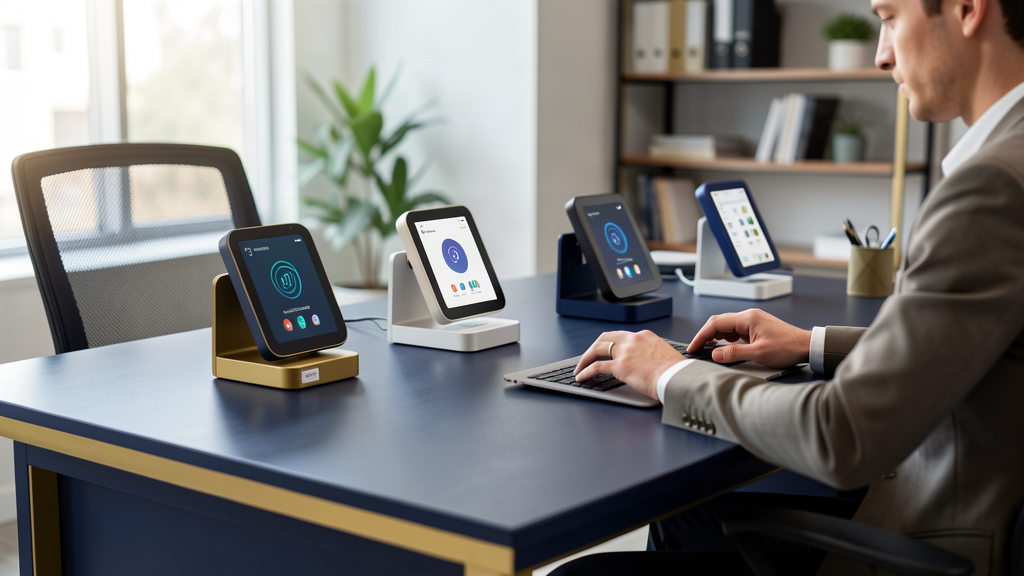
Here is the engineering fact worth sitting with: a single, current-generation workstation-class graphics card — the kind that fits on a desk, draws about as much power as a bright light fixture, and costs less than a single junior associate’s monthly fully-loaded rate — can now run four independent AI workers at the same time. Each worker holds its own long context window, roughly the length of a substantial matter file or engagement binder. Each carries on its whole assignment without touching the others. One self-hosted serving instance, four concurrent slots, all private, all local.
This is not a lab curiosity. The throughput works out to a small team of AI colleagues, each generating responses at a comfortable reading pace while the machine handles all four simultaneously. No queuing. No shared black box. No upload to a third party whose terms your client never consented to.
Why this matters more than the next model release
For firms that live on privilege and confidentiality, the vendor race was always a trap. Every improvement that flows through a public endpoint flows through someone else’s infrastructure first. A workforce that runs on machine you own changes the entire risk equation:
- Separation of practice areas. Litigation, tax, transactional, insurance claims — each can get its own isolated worker, so a privileged matter never shares a session with another client’s work the way it might inside a shared platform.
- Parallel, not bottlenecked. A practice with several matters in flight no longer waits in line for one API. Every engagement gets concurrent attention, priced into the box you already paid for.
- Predictable cost. No per-token meter, no surprise invoice, no per-seat subscription that climbs as you add work. The marginal cost of a fourth private worker is effectively zero.
- The audit trail is yours. When the work never leaves your hardware, your controls — access, logging, retention, deletion — are the ones that apply. You can show a regulator exactly what happened, because you hold every record of it.
The hardware has crossed the threshold firms care about
We’ve said it before and it bears repeating: the technical excuse for sending client data to a public AI died some time ago. What’s new is the concurrency — the capability, once exclusive to datacenter-scale setups, for a handful of simultaneous private workers on a single desk-sized machine. That closes the last practical gap. A firm no longer trades privacy for throughput. It gets both.
This is where the sizing question reframes itself. It was never are we big enough to afford private AI? It is do we have more concurrent workstreams than this one box can hold? The moment the answer is no — and for the overwhelming majority of firms it is — the sovereign option is on the table today, not in some future vendor roadmap.
The firms that treat this as a compliance win rather than a technology curiosity will be the ones who move first. The smartest ones are already doing the math.
Before you bring any AI into the firm, know what you’re exposing
Concurrency is only one strand of the wider privilege-and-compliance picture. Before you deploy a single private worker, take our Confidential AI Exposure Checklist and map exactly where client data already flows inside your practice. Knowing what you process is the precondition for keeping any of it safe.
Get the checklist at 9tailsadvisory.com/checklist.