 9
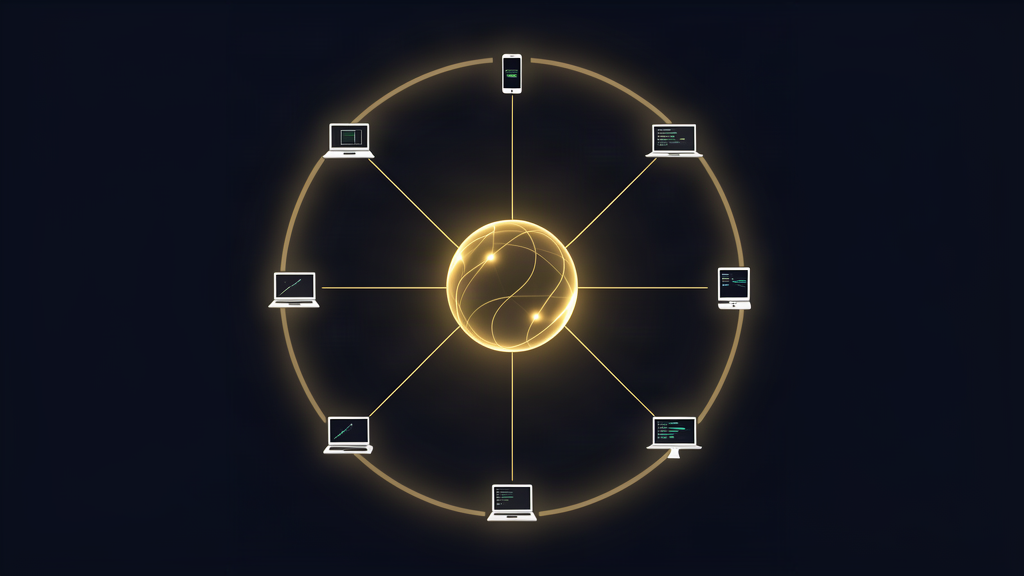
Here is the mental image most firms have of modern AI: a puddle of logins — a chat window here, an assistant there, a document tool somewhere else, each one a separate account, a separate vendor, a separate place your data quietly goes. Now picture the opposite: one machine inside your walls that runs the whole system, and every person and every device in the firm simply points at it.
That single-node architecture — one sovereign serving box for the entire firm — is quietly becoming the standard way serious deployments are built. It is not exotic. It is the same pattern as a server in your server room, applied to AI. And for a firm that cannot risk its privilege, it is the single most important design decision you will make, because it collapses the entire exposure surface to one thing you control instead of dozens you do not.
Here is how it works, in plain terms:
1. One load, many users. The model is loaded once, on your strongest machine. Every laptop, workstation, and tool in the firm sends its requests there and gets answers streamed back. Your people get the same well-trained AI everywhere they work, without a single document being sent to a vendor’s cloud.
2. Private by construction. The serving node sits on a closed, encrypted network that reaches your own machines from anywhere — but nothing is exposed to the public internet. There is no open port, no public endpoint, nothing an outsider can even reach, let alone subpoena or intercept. The data stays where the law says it must.
3. One address, one chain of custody. Everything the firm touches runs through the same private endpoint. That means one place to audit, one place to prove what happened, one configuration file that describes the entire system. Compliance reviewers ask for the chain of custody — you hand them a single account of where everything lives.
4. Sized to the firm, not to a vendor. The right box depends on your workload. A firm that needs a strong general model and moderate throughput can run comfortably on a single high-memory workstation. A firm with heavier volume, many concurrent users, or fine-tuning needs a multi-node class inference system. Either way, it is sized to your data and your headcount — not to whatever a cloud provider wants to rent you.
This is the architecture the “sovereign AI” story actually lives in. The models — the downloadable, open-weights kind — have caught up with the frontier. The remaining question is never “which vendor’s model is smartest.” It is: where does the system run, and can you prove what it touched? A single self-hosted serving node answers that question with a clean yes. A scattering of public accounts answers it with a shrug.
None of this removes the need for governance. Permissions, audit, and human review matter more than ever once the whole firm shares one system — an agent that can do everything can damage everything. But the foundation is no longer a trade-off. You get the capability and the control, in one place, inside your walls.
See where your firm stands before you consolidate. Download the Confidential AI Exposure Checklist and find out how many places your data already flows — because the fix is not more models. It is one box, under your control. Nine lives. Zero leaks.